

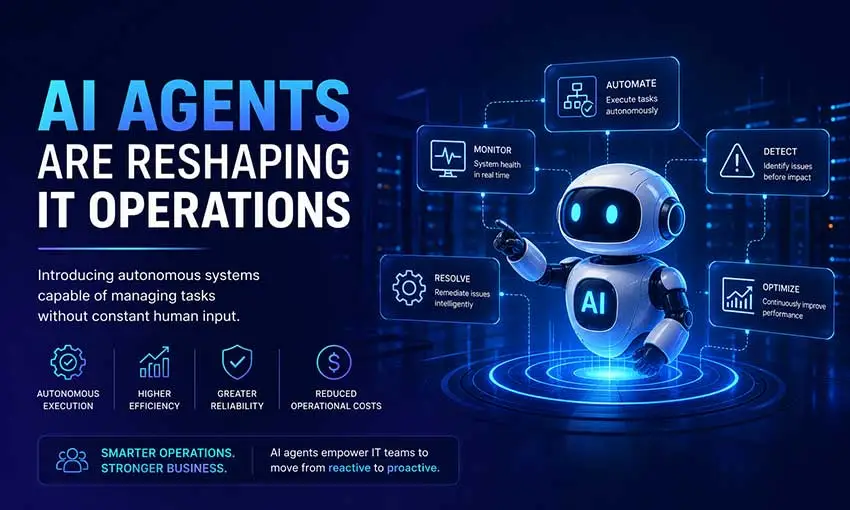
The IT industry is entering a new phase where automation is no longer limited to scripts and predefined workflows. In 2026, AI agents are taking center stage as intelligent systems capable of making decisions, learning from data, and executing tasks independently.
Unlike traditional automation tools, AI agents can analyze patterns, detect anomalies, and respond in real time. This has made them highly valuable in IT operations, where speed and accuracy are critical. For instance, organizations are now using AI agents to monitor infrastructure, identify system issues before they escalate, and resolve incidents automatically.
Another important development is the rise of interconnected AI systems. Instead of working in isolation, multiple agents collaborate to handle complex processes such as cloud management, cybersecurity monitoring, and service delivery. This reduces the need for manual intervention and significantly improves efficiency.
Businesses are also benefiting from cost savings and improved performance. With AI agents handling repetitive tasks, IT teams can focus on strategic initiatives like innovation and system optimization. However, this shift also requires careful planning. Companies must ensure proper governance, transparency, and oversight to maintain control over these intelligent systems.
As adoption continues to grow, AI agents are expected to become a core component of modern IT infrastructure. Organizations that embrace this technology early will likely gain a competitive advantage in efficiency, scalability, and service quality.