

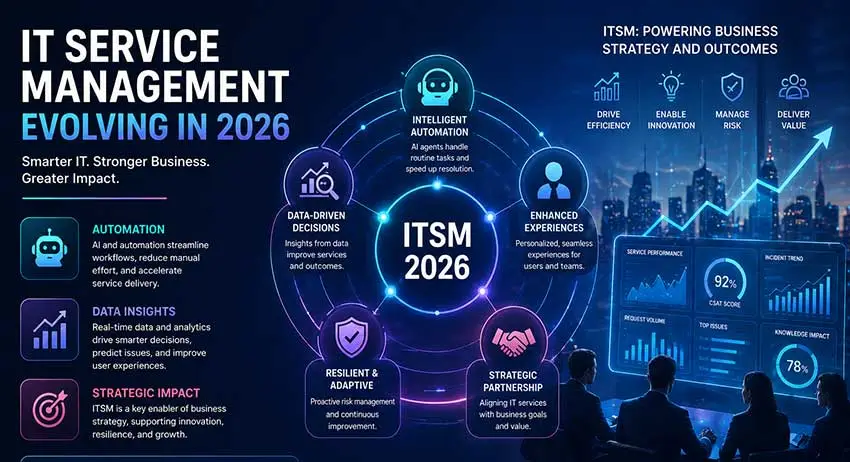
IT Service Management (ITSM) has traditionally been seen as a support function focused on resolving technical issues. However, in 2026, ITSM is transforming into a strategic asset that plays a crucial role in business success.
Modern ITSM platforms are powered by automation and data analytics, allowing organizations to deliver faster and more efficient services. Routine tasks such as ticket handling, system monitoring, and incident management are increasingly automated, reducing response times and improving productivity.
Another major trend is the integration of ITSM with other business functions. By combining IT data with business insights, organizations can make better decisions, optimize resources, and align IT services with overall goals. This shift is helping companies move from reactive problem-solving to proactive service delivery.
User experience has also become a top priority. Employees and customers expect quick, seamless support, and ITSM systems are evolving to meet these expectations. Features like self-service portals and intelligent chat support are making it easier for users to resolve issues without delays.
Furthermore, ITSM is contributing to cost optimization by identifying inefficiencies and improving resource utilization. This makes it an essential tool for organizations looking to remain competitive in a fast-changing digital landscape.
As ITSM continues to evolve, its role will expand beyond technical support to become a key driver of innovation and growth.